Monday, February 1, 2016

IMPERIAL JEWELS OF CHINA - October 8, 2015

DAY 7 - Shibaozhai

The major focus on our last day on the Yangtze River was a visit to the Shibaozhai temple located not far from Zhongxian.  Also referred to as "Precious Stone Stronghold", it was perched high atop a steep, 721-foot-high cliff and this 12-story red pavilion was a gem of Chinese architecture built in the Qing Dynasty in 1650.  It was comprised of a yellow glazed entrance gate, a nine-story red pavilion and a crowning three-story temple.  The temple once stood alone and was inaccessible except by an uncomfortable chair lift.  The pavilion and an interior spiral staircase were added in 1819.  From the temple we accessed a large stone terrace that provided breathtaking views of the river below.

When we docked, we were greeted by a group of people washing their laundry in the river right beside our gangplank.  Oblivious to us Westerners, they brought their laundry to the water's edge on foot, bicycles and motorbikes.  The clothes were washed, rinsed and wrung out in the mighty, filthy, polluted Yangtze River.


Laundry day on the Yangtze River


This small town was a dying town as the young people had long since moved away to find work.  The temple is the only thing that is saving the town.  The gangplank off the ship was treacherous with floating docks fastened together.


Our walk ashore off the ship


We had about a 2km walk from the ship to the entrance to the temple.  The roads along our walk were full of vendors hoping to sell souvenirs.  The stalls went on forever and the items sold continually repeated themselves.  Most items were cheap and knockoffs. 


The beginning of our 2 km walk to the pagoda, the vendors started here


Shops along the walk


Lost a bit in the translation!


As we approached the temple island, there was a long suspension bridge to walk across.  Each end was well anchored, but the majority of the bridge was moving around quite a bit and the footing was unstable.  Even Eric was a bit apprehensive, but it had been there a long time and apparently was considered safe.


Approach to the suspension bridge


View of the suspension bridge from the top of the pagoda


The pagoda was reached by a lovely stone walkway along the side of the island.  Once we reached the entrance to the pagoda, it was a one-way trip .... no turning back.


The wooden stairs inside were a real challenge as each step was a different width and height.  There were nine flights of stairs and the higher we went, the narrower and steeper they became.  Some of the older folk were finding it very difficult.


At the top was the temple and of course more gift shops.  The view from the top was lovely and the walk down was easy.

It was a very interesting morning but it was very hot and humid.  We were all glad to get back on the ship and have a shower.  During the afternoon we were able to do a tour of the bridge.  The ship's captain had sailed the Yangtze River for his whole career almost 40 years and did not speak a word of English.


The "bridge"

Our time on the Yangtze River was drawing to a close. It was such a unique experience and we were so pleased to be able to experience the "heart" of China.


Our route on the Yangtze River

HERE ARE SOME PHOTOS OF OUR SHIP


Our stateroom


The lobby and grand staircase


Just a small sample of the delicious food


More photos of the interior staircase


The lounge


Vendors shops


The onboard tailor shop


Jade display


The top sundeck with herb garden


Saturday, January 30, 2016

IMPERIAL JEWELS OF CHINA - October 7, 2015

DAY 6  - Wu & Qutang Gorges, Lesser Three Gorges

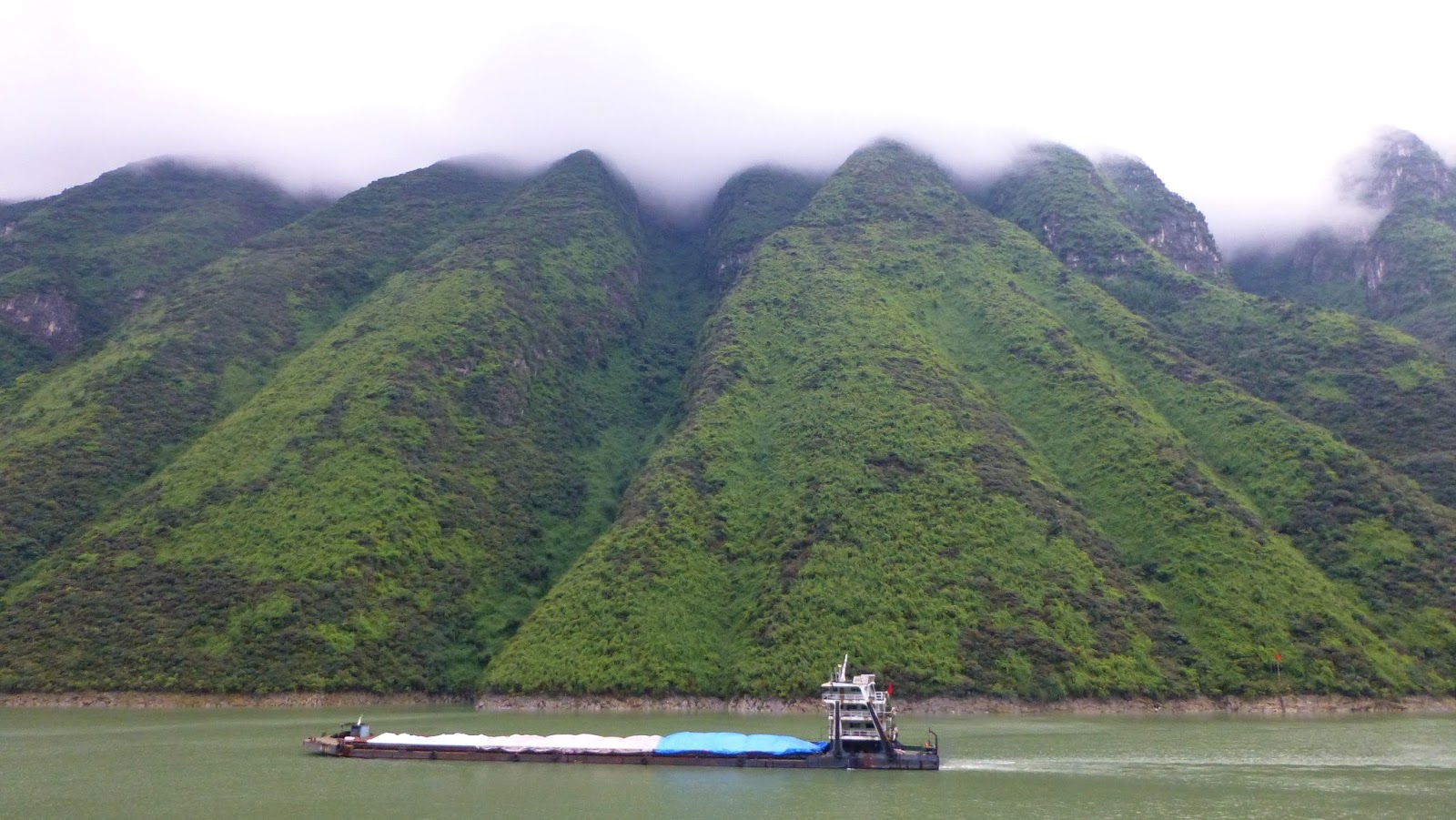
Today proved to be the most spectacular day for scenic cruising. During the morning we travelled through Wu (Witches) Gorge. Lush, mist-enshrouded mountains, including the legendary Twelve Peaks, rose up on both sides.

Wu (Witches) Gorge is perhaps the most beautiful, noted for its magnificent scenery of lush green mountains that are often shrouded in mist.  The river's currents shift and change constantly as it roars through the gorge, and Wu was once as dangerous to navigators as it was beautiful.  Here are the Twelve Peaks including the beautiful Shennu Feng ("Goddess Peak") topped by a naturally sculptured rock resembling a maiden looking down at the river.  Set picturesquely amidst these peaks is the town of Wushan, which looks over both the Yangtze and its Daning River tributary.

Some of the hundreds of photos taken today.  They do not do justice to the breathtaking beauty.


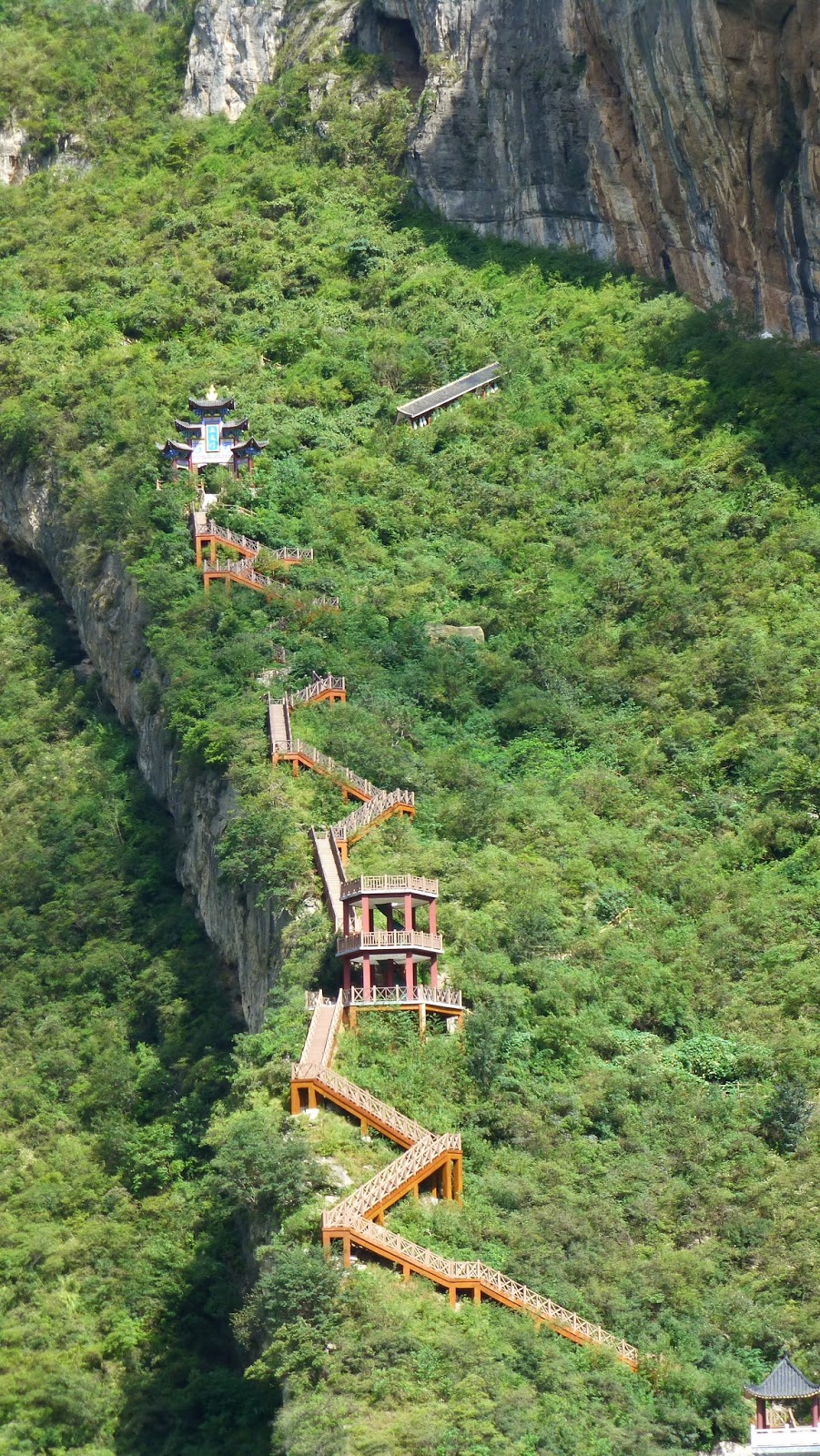
Steps up to a temple.  Only a small portion is shown in this photo.  A popular tourist area.


The Lesser Three Gorges lie on the Daning River.  Narrower than the Great Three Gorges, these remarkable canyons are equally impressive.  Sheer cliffs and steep mountains rise on either side and clear water flows between towering speaks covered with lush greenery.  There are also a number of historical sites, including the hanging coffins of the Ba people and the ancient plank road carved into the cliff side.  This plank road consists of more than 6,000 holes, about two inches in circumference carved by hand into the side of the cliffs.  Wooden stakes inserted into the holes supported bamboo pipes to carry brine and planks that created a road stretching more than 60 miles along the river.

The Lesser Three Gorges are already benefiting from the building of the Three Gorges Dam;  the river has always been extremely shallow, in some places only inches deep, and one could explore than only up to a certain point.  Rising water levels mean that the traditional sampans can now push further up the Daning to enjoy more of the beauty of the Lesser Three Gorges.

When we arrived at Wushan, we were transferred to smaller sightseeing vessels for our trip up the Lesser Three Gorges on the Daning River.  Our large ship could not navigate these waters.  Our local guide pointed out all the points of interest.


Our cute little sightseeing vessels with our local Chinese guide


The much narrower Daning River, the Lesser Three Gorges


Yup, this appears to be a bathroom with Western toilets, minus doors


After lunch, we gathered on the top deck for our sail into Qutang Gorge.  This spectacular gorge is the shortest and narrowest of the Three Gorges.  Our river guide Ben gave us an excellent landscape narration from the sun deck.  This area was "geologist heaven".

Once again, just a few of the many photos we took on our sail through Qutang Gorge


On the top deck, enjoying a lovely warm, sunny day


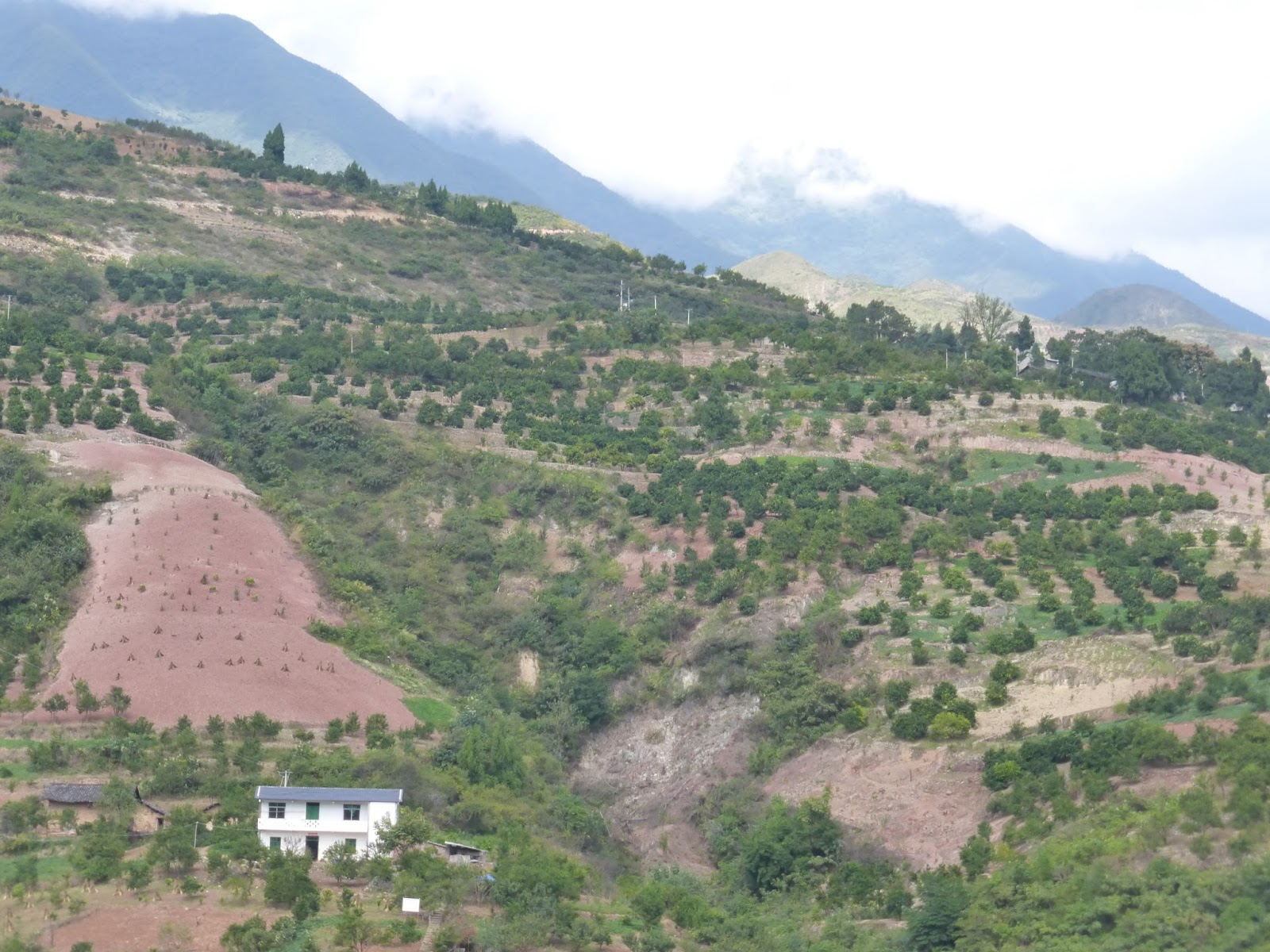
After the gorges, the landscape remained rugged, but quite agricultural.  Orange trees grow anywhere they can.  There were many small towns, shrines and temples along the river.


Orange groves


Shrine


More orange groves


Another temple 


The end of the Three Gorges